


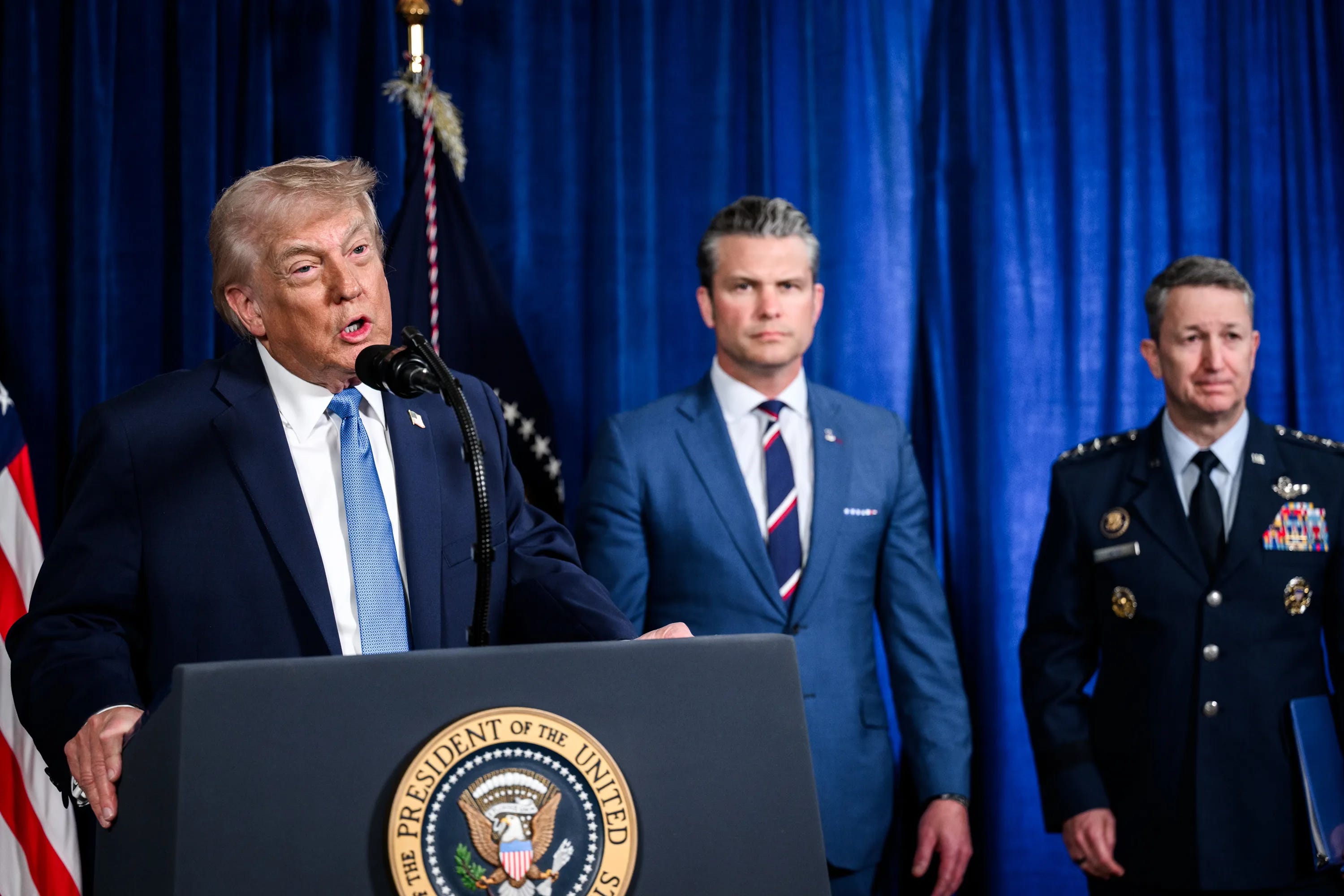
President Trump announces U.S. military operations in Venezuela, January 3, 2026. He told oil executives about the attack before Congress.
The Gist
In April 2024, Trump asked oil executives for $1 billion at a Mar-a-Lago dinner. They gave $75+ million to his campaign, wrote his energy policy, and funded his $300 million White House ballroom. In January 2026, Trump ordered the military seizure of Venezuela—home to the world’s largest oil reserves. He told oil companies about the attack before Congress. Those same companies will now get government-guaranteed contracts to rebuild Venezuelan oil infrastructure.
But here’s what nobody’s talking about: Trump’s family crypto company, World Liberty Financial, announced plans to launch tokenized oil trading in January 2026—the same month as the invasion. Trump owns 60% of that company and gets 75% of revenue. The family has already made $1 billion in crypto profits and holds $3 billion more in tokens.
This isn’t just campaign donors getting policy favors. This is a sitting president building personal financial infrastructure to profit from commodities his military just seized.
This is a long one. If you’re short on time, read The Gist and the section called “The Piece of the Action.” If you want the receipts, keep scrolling.
On January 3, 2026, Trump announced U.S. forces had grabbed Maduro. Standing at Mar-a-Lago, he said we’d “run the country” and our oil companies would “spend billions” rebuilding Venezuelan oil infrastructure.
Then he said something that should make everyone pay attention.
“It’ll be paid for by the oil companies directly. They will be reimbursed for what they’re doing, but that’s going to be paid.”
Read that again. Oil companies spend money. Then they get reimbursed. That’s not investment. That’s a government-guaranteed contract. Somebody’s paying the tab—we just don’t know who yet.
The official story: narco-terrorism, Tren de Aragua, getting back “stolen” American oil.
Notice what’s missing? Democracy. Trump never mentioned it. Not once.
When reporters asked, Rubio said discussing elections was “premature.” CNN reported the administration was “prioritizing administrative stability and repairing the country’s oil infrastructure over an immediate turn to democracy.”
They mentioned oil dozens of times. Democracy? Not on the list.
Two days later, aboard Air Force One, a reporter asked if Trump had spoken with oil companies before the operation.
“Yes,” Trump said.
“Did you maybe tip them off about what was gonna—?”
“Before and after. And they want to go in, and they’re gonna do a great job for the people of Venezuela.”
He told oil executives. He didn’t tell Congress.
But the economics don’t work. The timeline doesn’t work. And when you trace the money from January 2026 back to April 2024, this looks less like foreign policy and more like the back half of a transaction.
The Dinner
Nine months before Trump took office again, the Washington Post reported on a dinner at Mar-a-Lago.
April 11, 2024. About twenty oil executives showed up—Chevron, ExxonMobil, Continental Resources, Chesapeake Energy, Occidental Petroleum, Venture Global LNG, Cheniere Energy, EQT. The American Petroleum Institute sent lobbyists. Harold Hamm, the billionaire who runs Continental Resources, organized the whole thing.
One executive complained about spending $400 million lobbying Biden on environmental regulations. Nothing to show for it.
Trump’s answer stunned the room.
“You all are wealthy enough. You should raise $1 billion to return me to the White House.”
Then he laid out what they’d get: end the freeze on LNG export permits, auction more Gulf drilling leases, kill auto emissions rules, roll back environmental regulations.
On LNG permits: “You’ll get it on the first day.”
A billion dollars would be a “deal,” Trump said, because of the taxes and regulations they’d avoid.
The Policy Gets Written
The day before the Post story broke, Politico dropped its own bomb: the oil industry wasn’t just donating. They were writing policy.
“The U.S. oil industry is drawing up ready-to-sign executive orders for Donald Trump aimed at pushing natural gas exports, cutting drilling costs and increasing offshore oil leases in case he wins a second term.”
One industry lawyer didn’t bother hiding it: “Supportive industries are going to have to prop up a second Trump administration with expertise. We’re going to have to write exactly what we want, actually spoon feeding the administration. There’s 27-page drafts moving around Washington.”
They worried Trump wouldn’t focus on details. So they handled the details themselves.
The Money Moved
Eighteen days after the dinner, Continental Resources sent $1 million to Make America Great Again, Inc. Harold Hamm personally kicked in $1.6 million and started working the phones to other independent producers.
Kelcy Warren—executive chairman of Energy Transfer Partners, the company behind the Dakota Access Pipeline—gave $5 million in late May 2024. By 2025, he’d put in $25 million to MAGA Inc., another $5 million to Make America Great Again PAC, and $814,600 directly to the campaign.
Jack Fusco, Cheniere Energy’s CEO, gave $250,000 to the Trump 47 Committee in June. He’d never done anything like that before.
Vicki Hollub at Occidental Petroleum put in $41,300 to the RNC through Trump 47, plus more totaling over $90,000. Occidental later gave a million to the inauguration fund.
By election day: at least $75 million from oil and gas to Trump and affiliated PACs. Another $11.8 million to the inauguration after he won.
Senate Democrats on the Budget and Finance Committees demanded answers. The executives’ responses, according to the committees, “did not refute the accuracy of these reports.” They just refused to cooperate. Republicans held the House. Nothing happened.
Payoff
Trump delivered.
First 100 days: at least 145 actions to undo environmental rules—more than his entire first term. LNG export pause ended day one, exactly as promised. Energy Transfer Partners got project approval; Kelcy Warren’s net worth jumped nearly 10 percent on the stock move.
The legislative package: $18 billion in tax incentives for oil and gas while clean energy incentives got axed.
Chris Wright became Energy Secretary. He founded Liberty Energy, North America’s second-largest fracking company. He’d donated $228,390 to Trump’s joint fundraising committee and held about 2.6 million shares in Liberty—worth over $40 million.
Those 27-page executive orders? They were getting signed.
But for some of these oil interests, domestic policy wasn’t enough.
Venezuela
Venezuela sits on the world’s largest proven oil reserves—303 billion barrels, more than Saudi Arabia. American companies built a lot of that infrastructure. Then Chávez nationalized everything, and Maduro kept it going.
The U.S. majors have outstanding claims:
ConocoPhillips: $8.7 billion ICSID arbitration award from 2019. Venezuela appealed and lost in January 2025. With interest, it’s now past $10 billion—the largest investment arbitration award ever against a sovereign state.
ExxonMobil: $1.6 billion ICSID award from 2014, though most of that got offset by a prior ICC award. After a 2024 resubmission ruling, the effective remaining claim is about $77 million.
Chevron: The only major still operating there under Treasury waivers. They were pulling 140,000-150,000 barrels daily before the intervention—somewhere between 17 and 25 percent of Venezuela’s total output, depending on whose numbers you use.
Here’s what the “we’re taking back our oil” story leaves out: Venezuelan crude is some of the hardest, most expensive oil on Earth to produce.
The Oil Nobody Wants
Venezuelan crude isn’t like Saudi or Texas oil. The export blend, Merey 16, has an API gravity around 16° (heavy) with 2.5-3.4% sulfur (sour). The Orinoco Belt’s extra-heavy stuff is worse—basically tar with API gravity of 8-10° that needs blending at a 60/40 ratio with imported diluent just to move through a pipeline.
Processing it requires specialized refineries with Nelson Complexity Index above 10, coking units, hydrocracking, serious desulfurization equipment. Not every refinery can touch it. Merey traded at a $14-21 per barrel discount below Brent in December 2025.
The infrastructure has collapsed. PDVSA refineries run at 10-30% capacity. The Paraguaná Refining Center—once the world’s largest—operates at roughly 10% of its 955,000 barrel-per-day capacity. Venezuela had zero active drilling rigs as of late 2020, down from 87 in 2013. Pipelines are 50+ years old. PDVSA says $8 billion just for pipeline updates.
PDVSA’s own 2021 assessment: $58 billion minimum to restore 1998 production levels of 3.4 million barrels per day.
Francisco Monaldi at Rice University’s Latin America Energy Program: “at least a decade and about a hundred billion dollars of investment” to reach 4 million barrels per day.
In December 2025, the Trump administration asked U.S. oil companies about returning to Venezuela. According to NPR, citing Politico, the companies weren’t interested—even with regime change on the table.
So why would executives who refused to invest voluntarily suddenly benefit from a military takeover?
The Reimbursement Game
This is where Trump’s language matters.
He didn’t say oil companies would invest at their own risk. He said they’d “spend billions” and then “be reimbursed.”
That’s not private investment. That’s a cost-plus government contract—the same structure that made Halliburton and KBR rich in Iraq.
Who pays the reimbursement?
Option 1: Venezuelan oil revenues. We control the assets now. Oil sales pay back the companies—meaning American corporations get paid from resources that belonged to Venezuela.
Option 2: U.S. taxpayers. If Venezuelan oil revenues fall short (likely, given the infrastructure), American taxpayers backstop the contracts.
Option 3: Seized Venezuelan assets. The U.S. has frozen Venezuelan government assets for years. Liquidate them to pay American companies.
Any way you cut it, the oil companies face minimal risk. They refused to invest in December 2025 because the economics were garbage. Now they’ll do the same work—with guaranteed reimbursement.
The companies that funded the campaign wrote the energy policy. Now they’re positioned for government-guaranteed contracts to rebuild an oil industry the U.S. military just seized.
The Ballroom
There’s another piece to this transaction that connects everything.
In October 2025, Trump demolished the White House East Wing to build a $300 million ballroom. He said it would be paid by “patriot donors” and himself—not taxpayers.
The donor list reads like a ledger of quid pro quo:
Harold Hamm—the billionaire who organized the April 2024 Mar-a-Lago dinner where Trump asked for $1 billion—is on the list.
Lockheed Martin—which has received $33.4 billion in federal contracts in 2025 alone, including Caribbean-related defense contracts—donated over $10 million.
Google/Alphabet—paid $22 million toward the ballroom as part of a legal settlement with Trump over his YouTube ban.
Palantir—awarded over $800 million in government contracts in fiscal 2025—donated.
Constitutional lawyer Bruce Fein told Al Jazeera: “Trump is completely transactional. Funders of the ballroom will be rewarded with regulatory favours or appointments or given pardons for federal crimes.”
Attorney Norm Eisen, who served as co-counsel during Trump’s first impeachment, called the ballroom “a corruption tumor on the White House grounds” and said Trump is “setting up a payback loop to the big oil companies.”
The oil companies fund Trump’s campaign. They fund his vanity project. Then they get government-guaranteed contracts to rebuild the oil industry the military just seized.
That’s the loop.
The Reimbursement
Trump keeps saying oil companies will “be reimbursed.” How does that work?
The money’s already here.
Citgo—Venezuela’s crown jewel U.S. refinery subsidiary—was just sold for $5.9 billion in December 2025 by a Delaware court to pay PDVSA’s creditors.
Frozen PDVSA assets in the United States: about $7 billion, locked since 2019 sanctions.
That’s roughly $13 billion sitting in U.S. jurisdiction right now.
What oil companies are owed:
ConocoPhillips: $8.7 billion arbitration award (2019), upheld January 2025, now past $10 billion with interest
ExxonMobil: $1.6 billion award (2014), though reduced after offsets
Total for the big two: $10-11 billion
The math works. There’s enough to make ConocoPhillips and Exxon whole.
The catch: The Citgo auction has $19 billion in registered claims from bondholders, other arbitration winners, and various creditors—all fighting over that $5.9 billion pot. Normal bankruptcy proceedings? Everyone gets pennies on the dollar.
Unless the U.S. government is “running” Venezuela.
Now Trump’s people control disbursement. They could:
Prioritize U.S. oil company claims over foreign creditors
Direct frozen assets to specific companies
Structure future oil revenue to benefit campaign donors
Bypass Delaware court under national security authority
The companies that funded Trump’s campaign don’t need Venezuela to pay them back. They need the U.S. government—now running Venezuelan assets—to jump them to the front of the line.
Venezuela owes $150-170 billion total. Its GDP is $82.8 billion. The country can’t pay. But Trump decides who gets paid first from what’s already seized.
That’s what “reimbursement” means.
The Piece of the Action
Campaign donations are one thing. Ballroom donations are another. But does Trump get a direct cut?
He does.
World Liberty Financial is a crypto company. Trump owns 60% through DT Marks DEFI LLC. The family gets 75% of revenue from token sales.
By December 2025, the Trumps had pocketed $1 billion and held $3 billion more in unsold tokens. Peak family stake in September 2025: $17 billion.
The House Judiciary Democrats released a report in November 2025: “Trump, Crypto, and a New Age of Corruption.” They documented holdings worth $11.6 billion and income over $800 million from crypto sales—just the first half of 2025.
Now pay attention.
In October 2025, World Liberty Financial announced plans to tokenize commodities. Zach Witkoff—son of Steve Witkoff, Trump’s Middle East envoy—is a co-founder. He told a crypto conference: “I think commodities are a really interesting area for us, whether it be oil, gas, things like cotton, timber, all of those things, frankly, should be traded on chain.”
December 2025, at a Binance event in Dubai, Witkoff confirmed: World Liberty would launch tokenized oil and gas products in January 2026.
Same month U.S. forces seized Venezuela.
The company is building infrastructure to trade tokenized oil paired with its USD1 stablecoin. That stablecoin has $3.8 billion in circulation, generating about $100 million annually in interest—75% goes to Trump’s company.
The transaction:
Oil executives fund Trump’s campaign ($75+ million)
Oil executives fund Trump’s ballroom ($300+ million total)
Trump orders military seizure of world’s largest oil reserves
Oil companies get government-guaranteed rebuild contracts
Trump’s crypto company launches tokenized oil trading same month
Every barrel that flows could generate fees for Trump’s family
Campaign donations were appetizer. Ballroom was main course. Tokenized oil is dessert.
This isn’t indirect benefit through policy. A sitting president built personal financial infrastructure to profit from commodities his military seized.
The House Judiciary report: “Donald Trump has turned the Oval Office into the world’s most corrupt crypto startup operation.”
Who Actually Benefits
Forget oil extraction. Follow the money to oil services, defense contracts, and geopolitical positioning.
Defense contractors:
Lockheed Martin: $3.1 billion Aegis support contract in 2025, plus $9.5 billion for JASSM and LRASM missiles through 2033
RTX (Raytheon): $3.5 billion AMRAAM production contract, $251 billion total backlog
The carrier strike group carries 185+ Tomahawk missiles at $1.3 million each
Energy services companies—the ones who’d actually rebuild infrastructure:
Liberty Energy (Chris Wright’s company) specializes in fracking services
Halliburton, Schlumberger, Baker Hughes provide oilfield services globally
Pipeline companies like Energy Transfer Partners (Kelcy Warren) could land infrastructure contracts
Geopolitical displacement:
China loses 600,000+ barrels per day—about 4% of their imports
Russia loses $9-12 billion in military and energy investments
Iran loses a Western Hemisphere partner and sanctions-evasion network
Combined foreign stakes displaced: roughly $165 billion
Oil extraction economics are terrible for years. But infrastructure rebuild contracts, defense spending, and geopolitical wins? Those pay immediately.
Machado Gets Cut Out
In November 2025, Venezuelan opposition leader María Corina Machado spoke at the America Business Forum in Miami. She promised to “open Venezuela for foreign investment” worth “$1.7 trillion,” to “kick the government from the oil sector,” and “privatize all our industry.”
After the January 2026 intervention, Trump rejected her. She “doesn’t have the support within or the respect within the country.”
Instead, the administration said it would “run the country” directly—Hegseth, Rubio, and military leadership in charge “until such time as a proper transition can take place.”
The privatization Machado promised to a future Venezuelan government? The Trump administration looks positioned to do it themselves—cutting out the Venezuelan opposition entirely.
The Timeline
DateWhat Happened
April 11, 2024 Mar-a-Lago dinner. Trump asks oil executives for $1 billion, promises specific rollbacks.
May 8, 2024 Politico reports oil industry drafting ready-to-sign executive orders
May 9, 2024 Washington Post publishes dinner details
April 29, 2024 Continental Resources donates $1 million to Trump super PAC
May-Nov 2024 $75+ million flows from oil/gas to Trump campaign
July 28, 2024 Venezuelan election; Maduro claims victory despite evidence showing opposition won 2-to-1
November 2024 Trump wins; $11.8 million from energy to inauguration fund
January 2025 Trump takes office; ends LNG export pause immediately
February 2025 Tren de Aragua designated Foreign Terrorist Organization
November 2025 Cartel de los Soles designated FTO with Maduro named as leader
November 2025 USS Gerald R. Ford carrier strike group deploys to Caribbean
November 2025 María Corina Machado wins Nobel Peace Prize
December 2025 U.S. asks oil companies about returning to Venezuela; they decline
December 16, 2025 Total blockade of Venezuelan oil tankers announced
January 2-3, 2026 Operation Absolute Resolve captures Maduro
January 3, 2026 Trump announces U.S. will “run” Venezuela; oil companies will rebuild and “be reimbursed”
January 5, 2026 Trump admits he told oil companies about the attack “before and after”—but not Congress
What This Means
The stated justifications aren’t fabricated. Maduro is a brutal dictator. Tren de Aragua has committed real crimes on American soil. The 2024 Venezuelan election was stolen—one of the most blatant electoral frauds in modern Latin American history.
But timing and structure matter.
The oil executives who funded Trump’s campaign wrote his energy policy. Those same executives have billions in outstanding claims against Venezuela. They refused to invest voluntarily when asked in December 2025. Now they’ll rebuild infrastructure with guaranteed government reimbursement. The administration rejected Venezuelan opposition leadership for direct U.S. control. The promised “quick oil payoff” contradicts every industry analysis of Venezuelan crude economics.
The real immediate beneficiaries: defense contractors, energy services companies, and firms positioned for cost-plus rebuild contracts.
When Trump stood at Mar-a-Lago on April 11, 2024, he told oil executives a billion dollars would be a “deal” for what they’d get.
When Trump stood at Mar-a-Lago on January 3, 2026, he announced we’d captured a foreign head of state and would administer his country while American oil companies rebuilt the infrastructure—and got reimbursed.
The question isn’t whether this serves American interests. The question is which Americans’ interests—and whether those interests purchased it.
For Veterans
Every veteran who served in Iraq heard the shifting justifications: WMDs, then democracy, then stability, then “we’re there now.” Every veteran watched the quick victory become a decade-long occupation. Every veteran saw contractors get rich while service members extended deployments.
The Venezuela briefing has the same tells:
No exit criteria (”until proper transition”)
Superlative claims that strain credibility (”like people have not seen since World War II”)
Immediate pivot to resource extraction
No congressional notification
“Boots on the ground if we have to”
Private companies with guaranteed reimbursement
Watch for:
Reserve/Guard activations to SOUTHCOM
Private military contractor hiring
Mission creep from “apprehension operation” to “security assistance” to “stability operations”
Benefits and care infrastructure strain if this expands
The same companies that funded the campaign winning rebuild contracts
The oil may take a decade to flow. Deployments could start tomorrow. The contracts are already being written.
Tbird is a Navy veteran (VAQ-34, 1983-1990), founder of HadIt.com, and publisher of Tbird’s Quiet Fight.
I use AI as a research and editing assistant—the same way I’d use a good reference book or a sharp editor. Every word published here is reviewed, verified, and approved by me. The perspective, accuracy, and editorial decisions are mine.
Sources
[^1]: Josh Dawsey and Maxine Joselow, “What Trump promised oil CEOs as he asked them to steer $1 billion to his campaign,” Washington Post, May 9, 2024.
[^2]: Dawsey and Joselow, Washington Post, May 9, 2024; Lisa Friedman et al., “At a Dinner, Trump Assailed Climate Rules and Asked $1 Billion from Big Oil,” New York Times, May 9, 2024.
[^3]: Dawsey and Joselow, Washington Post, May 9, 2024.
[^4]: Ben Lefebvre, “‘A little bold and gross’: Oil industry writes executive orders for Trump to sign,” Politico, May 8, 2024.
[^5]: Lefebvre, Politico, May 8, 2024.
[^6]: House Committee on Oversight and Accountability Democrats, “In New Bicameral Letters, Democrats Demand Big Oil Executives Comply with Investigation,” September 10, 2024.
[^7]: “Fossil Fuel Industry Donors See Major Returns in Trump’s Policies,” Brennan Center for Justice, 2025; “Oligarchs and the Trump Admin: Kelcy Warren,” Revolving Door Project; “Trump’s super PAC in powerful financial position,” CNN, August 1, 2025.
[^8]: Rachel Frazin, “Oil bigwigs open wallets for Trump after billion-dollar request,” The Hill, October 31, 2024.
[^9]: Frazin, The Hill, October 31, 2024.
[^10]: Brennan Center for Justice, 2025.
[^11]: House Committee on Oversight and Accountability Democrats, September 10, 2024; Senate Budget Committee, “Budget, Finance Committees Launch Joint Investigation into Donald Trump’s Quid Pro Quo Offer to Big Oil,” May 23, 2024.
[^12]: Brennan Center for Justice, 2025.
[^13]: Brennan Center for Justice, 2025.
[^14]: “Fossil fuels enriched Trump’s DOE pick,” E&E News, December 2024; “Chris Wright,” Wikipedia.
[^15]: U.S. Energy Information Administration, “Venezuela Country Analysis,” 2024.
[^16]: “Nearly $9 billion win for ConocoPhillips as Venezuela loses arbitration case,” Offshore Energy, January 24, 2025; “International Arbitration Tribunal Orders Venezuela to Pay ConocoPhillips $8.7 Billion,” ConocoPhillips, March 8, 2019.
[^17]: “Exxon Mobil is awarded US$1.6 billion in ICSID claim against Venezuela,” Herbert Smith Freehills, October 2014; “Venezuela defeats bulk of resubmitted Exxon claim,” Global Arbitration Review.
[^18]: “What role could Chevron, Exxon play in Venezuela’s oil industry?,” Houston Chronicle, January 2026; “Trump says U.S. oil companies will invest billions,” CNBC, January 3, 2026.
[^19]: “Merey 16: Technical profile, history, market and challenges of Venezuela’s heavy crude,” Shale24.
[^20]: Shale24; U.S. Energy Information Administration, 2024.
[^21]: U.S. Energy Information Administration, 2024; “Venezuela’s heavy crude oil output increases are limited,” EIA Today in Energy.
[^22]: “Venezuela needs $58bn to restore pre-Chavez crude output levels,” Al Jazeera, May 10, 2021; “Experts say Trump’s plan faces major hurdles,” PBS NewsHour, January 2026.
[^23]: “Why some U.S. oil companies aren’t interested in returning to Venezuela,” NPR, December 23, 2025.
[^23a]: “Meet all 37 White House ballroom donors funding the $300 million build,” Fortune, October 26, 2025; “What donors to Trump’s White House ballroom stand to gain,” CBS News, October 25, 2025.
[^23b]: “Who are the private donors funding Trump’s White House ballroom?,” Al Jazeera, October 24, 2025.
[^23c]: Norm Eisen on The Daily Blast with Greg Sargent, “Transcript: Marjorie Taylor Greene Wrecks Trump in Harsh Maduro Tirade,” The New Republic, January 5, 2026.
[^23d]: “World Liberty Financial,” Wikipedia; “How Trump’s crypto empire fared in 2025,” Yahoo Finance, January 5, 2026.
[^23e]: Rep. Jamie Raskin, “New Report Exposes the Trump Family’s Multi-Billion-Dollar Crypto Empire,” House Judiciary Committee Democrats, November 25, 2025.
[^23f]: “Trump crypto firm expansion with tokenized commodities, debit cards,” CNBC, October 1, 2025.
[^23g]: “Trump’s World Liberty Financial to Debut RWA Products in January,” Yahoo Finance, December 3, 2025.
[^23h]: Edith Olmsted, “Trump Reveals Who He Warned of Venezuela Attack—and It’s Not Congress,” The New Republic, January 5, 2026.
[^23i]: “A clearer picture is emerging of what Trump meant when he said the US will ‘run’ Venezuela,” CNN, January 4, 2026.
[^23j]: “Venezuela denounces US-ordered ‘forced sale’ of oil company Citgo,” Al Jazeera, December 3, 2025.
[^23k]: “Venezuela’s billions in distressed debt: Who is in line to collect?,” CNBC, January 4, 2026.
[^23l]: “History of U.S. involvement in Venezuela’s petroleum industry,” Wikipedia; “United States sanctions during the Venezuelan crisis,” Wikipedia.
[^24]: “The US’s Top Military Contractors Are Cashing In on Caribbean Operations,” Truthout.
[^26]: “Trump says US is taking control of Venezuela’s oil reserves,” CNN Business, January 3, 2026.
[^27]: “International reactions to the 2026 United States strikes in Venezuela,” Wikipedia.
[^28]: “Nobel Peace laureate María Corina Machado Offers to Sell $1.7 Trillion of Venezuela’s Assets,” Just International.
[^29]: White House press briefing transcript, January 3, 2026.
[^30]: “2024 Venezuelan presidential election,” Wikipedia; “Nicolás Maduro’s ouster: Key political players,” The Hill.
Additional Sources:
“U.S. seeks to tap Venezuela’s vast oil reserves,” CBS News
“Venezuelan oil revival ‘could cement lower prices’,” Fortune
“Trump said Venezuela stole America’s oil. Here’s what really happened,” CNN Business
“Trump’s MAGA Inc. SuperPAC Donor List,” Public Citizen
“A brief history of Kelcy Warren and Donald Trump,” Greenpeace
Rep. Jamie Raskin, “Ranking Member Raskin Probes Donald Trump’s Offer to Change U.S. Energy Policy,” House Oversight Committee Democrats, May 14, 2024
Senate Finance Committee, “Finance, Budget Committees Launch Joint Investigation,” May 23, 2024
“Venezuela and U.S. Military Strikes: Considerations for Congress,” Congressional Research Service