The VA Wants to Blow Up Its Health Care Structure. The Man Who Built It Says That’s a Mistake.
House Hearing on VHA Reorganization Reveals Deep Divisions, Missing Plans, and a $521 Million Price Tag Nobody Budgeted For
The Gist:
The VA wants to consolidate its 18 health care regions into five. The man who designed the current structure says that’s a mistake. Congress got a half-page letter and a slide deck instead of a plan. The first-year cost is $521 million that nobody budgeted for. VHA has lost 20,400 employees — including over 1,000 doctors. Here’s what happened, what it means, and what veterans should watch.
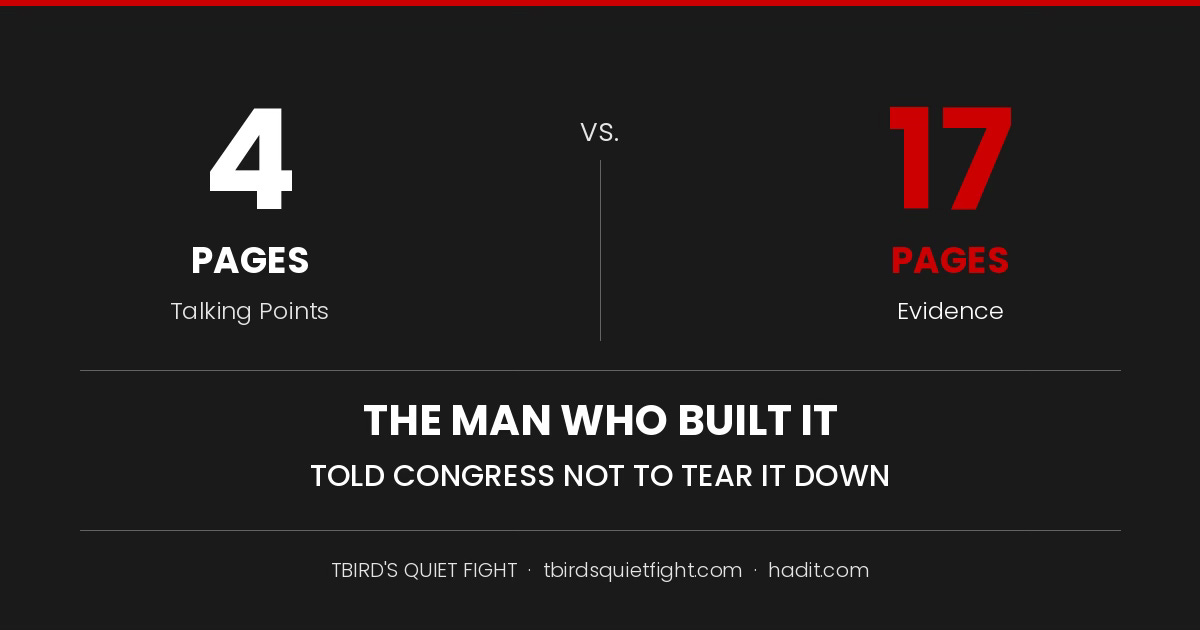
By the Numbers $521 million — first-year cost, zero dollars budgeted $312 million — net cost over five years 20,400 — VHA employees lost 1,000+ — doctors gone, 100 in December alone ½ page — what Congress got instead of a plan 17 pages — what the man who built the system submitted saying don’t do this
On February 11, 2026, the full House Veterans’ Affairs Committee held an oversight hearing titled “Opportunities with VHA Reorganization.” (Video) The stated purpose: examine Secretary Doug Collins’ plan to consolidate the Veterans Health Administration from 18 Veterans Integrated Service Networks (VISNs) down to five, with 15 new Health Service Areas underneath them.
What actually happened was two and a half hours of confrontation over staffing losses, missing plans, and a reorganization nobody requested funding for.
Here’s what veterans need to know.
What the Reorganization Actually Proposes
The plan, as presented, restructures VHA’s regional management from 18 VISNs to five larger VISNs, each containing three Health Service Areas (HSAs). The stated goals:
Eliminate duplicative layers of bureaucracy
Empower local hospital directors
Ensure consistent application of VA policies across all facilities
Improve health care quality for veterans
VHA Central Office would set policy. A new Medical Operations Center would standardize implementation. The five VISNs would handle regional oversight. HSAs would focus exclusively on care delivery. Local facility directors would gain more decision-making authority.
Collins and his team — Under Secretary for Health John Bartrum, Assistant Secretary for Human Resources Mark Engelbaum, and Acting Chief Operating Officer Gregory Goins — framed this as common-sense reform based on decades of GAO and OIG recommendations. (For a detailed breakdown of how Collins used those same reports at his Senate testimony two weeks earlier, see “The Efficiency Theater: Reading Between the Lines of VA’s VHA Reorganization.”)
Collins’ central argument: VHA workforce grew 14% between fiscal years 2019 and 2024, but veteran encounters only grew 6%. Some facilities saw 30% FTE increases while patient encounters actually declined. The system is overstaffed at the administrative level and understaffed at the clinical frontline.
Half a Page and a Slide Deck
Ranking Member Mark Takano held up a 134-page book from 1995 — the “Vision for Change” document that guided the last major VHA reorganization. That plan included detailed analyses, congressional input, veteran input, VSO input, and employee input.
What Congress got this time: a half-page notification letter and a 10-page slide deck.
Takano didn’t mince words: “You are tearing down the walls before determining whether they’re load-bearing. And veterans will be the ones crushed if the structure collapses.”
He ticked off what’s happening simultaneously: an unproven electronic health record deployment, a trillion-dollar community care contract, and severe staffing shortages across the system. “Any one of these projects would strain an organization,” he said. “Taken altogether, they will overwhelm it.”
The Numbers Nobody Can Ignore
Takano delivered the workforce losses since Collins took the helm — across VHA alone:
Net loss of 20,400 employees
Over 1,000 doctors (100 left in December alone)
Over 2,300 registered nurses
Nearly 700 medical support assistants
Nearly 700 social workers
Nearly 650 licensed practical nurses
Nearly 300 psychologists
Over 250 police officers
Collins pushed back hard. He called the 30,000 departures “all voluntary early retirement” — not firings. He pointed to the vacancy rate for doctors and nurses holding steady between 14% and 19% over the past four years, noting the 19% peak was in 2022 under Biden. He argued VA is still up in total FTE compared to five years ago.
But then Rep. Ramirez spotlighted an inconvenient detail about one of Collins’ headline achievements: the reduction in time-to-hire from 109 days to 47 days. Under the previous administration, that metric measured time from application to first day on the job. Under Collins, it measures time to a tentative job offer — a fundamentally different thing.
“That is why we can’t trust anything coming out of your office,” Ramirez said.
The Cost Nobody Budgeted For
Rep. Debbie Wasserman Schultz, ranking member on the Military Construction-VA appropriations subcommittee, delivered the financial reality check.
A draft cost estimate provided to her subcommittee showed approximately $521 million in upfront costs during the first year and a net cost of around $312 million over five years. These numbers contradicted earlier assurances that the reorganization would be cost-neutral.
When Wasserman Schultz asked where the $521 million would come from — since the FY2026 bill already signed into law appropriated zero dollars for a VHA reorganization — Collins said it would come from “regular account funds.”
She pressed: Would the committee see a reprogramming request? “Probably,” Collins said. Would there be an updated cost estimate in the FY2027 budget request? “That is being put together now. Yes.”
Wasserman Schultz also flagged a projected $1.7 billion in savings from “personnel actions” resulting from the reorganization — including moving administrators into clinical roles, which would result in pay cuts. Her time expired before she could finish her questions. Chairman Bost declined to extend it.
The Man Who Built the VISNs Says This Is Wrong
Perhaps the most significant testimony came not from Collins but from Dr. Kenneth Kizer, the former VA Under Secretary for Health who designed the VISN structure in the 1990s. His written testimony — a 17-page document submitted for the record — was a surgical dismantling of the reorganization’s rationale.
Kizer cited research showing 70% of organizational change efforts fail. He noted that McKinsey found only 23% of reorganizations are considered successful. Bain & Company reported that redesigns “fall short because leaders focus on structure while underinvesting in how work actually gets done.”
His core argument: VHA’s performance problems stem from leadership failures, unclear policies, and poor execution — not structural defects. Redrawing the org chart won’t fix them.
“Rather than spending scarce resources on an unclear and unnecessary organizational restructuring plan, energy and time should be devoted to creating and implementing a much more robust, healthcare-specific leadership development program,” Kizer wrote.
In response to written questions submitted by the committee, Kizer was unequivocal. Does the VISN structure continue to be the preferred organizational model? “In a word, yes.”
Does VHA’s current structure present insurmountable barriers to addressing the problems called out by GAO? “In brief, no.”
Is now the right time for a major restructuring? “In a word, no.”
Kizer noted that several higher priorities should take precedence: successfully implementing the new electronic health record, implementing a new community care contract, fixing wasteful VA-Medicare Advantage spending, and growing leadership skills — “especially given the exodus of so many experienced VHA leaders and managers during the past year.”
What This Means for Veterans
The reorganization is happening. Collins has been clear about that. But the hearing exposed several fault lines veterans should watch:
No finalized plan exists. The VA described what was presented in December as “the start of a discussion” — not a final plan. Goins acknowledged the final version “may look somewhat different” as input continues. The statutory report to Congress under Title 38 § 510(b) has not yet been submitted.
Continuity of care is the stated priority — but there’s no documented plan. When Rep. McGarvey asked for a continuity of care plan, the answers conflicted. Collins and Goins both eventually said “yes,” but McGarvey pointed out: “If you have a continuity of care plan, we haven’t received it.”
The EHR rollout is supposed to be unaffected. The EHRM system goes live April 11 in Michigan, with 13 new sites planned for 2026 and 164 more by 2031. VA leadership committed that the reorganization would not impede the EHR schedule. But Rep. Bazinski revealed that VA canceled its standing meetings with GAO on the EHR program because, per a GAO email, “leadership and resources are strained.” VA has also not nominated a Chief Information Officer.
Women veterans were nearly left out of the org chart. Rep. Brownley noted that the Department of Women’s Health — codified in law under the Deborah Sampson Act of 2021 — did not appear on the reorganization chart. VA officials said it falls under “national programs” on the “enterprise side.” Brownley also raised the rollback of reproductive health access, noting that women in uniform have access to abortion in cases of rape, incest, or threat to the mother’s life, but lose that access when they transition to the VA.
Territories were missing from the map. Rep. Sablan from the Northern Mariana Islands — which has one of the highest per-capita military enlistment rates of any state or territory — pointed out that the reorganization map showed only the continental United States. VA confirmed territories remain under their current oversight assignments, but the omission raised alarms.
What Comes Next
Chairman Bost secured a commitment from Collins to return for additional hearings as the reorganization moves forward. The hearing ended abruptly at 12:30 — Collins’ hard stop — with several members unable to ask their questions and closing statements submitted for the record.
Wasserman Schultz noted this was only the second time Collins had appeared before the committee since being sworn in. Takano pushed for more appearances. Bost agreed to hold more hearings.
The VA must still submit the statutorily required report under 38 U.S.C. § 510(b) before implementation can begin. Collins committed to following the law. Whether the plan that arrives on Capitol Hill will contain the detail Congress is demanding remains to be seen.
In the meantime, veterans are left with a VA that’s shedding staff, promising better outcomes, and asking for trust it hasn’t earned — armed with a slide deck and a half-page letter to justify the largest health care reorganization in three decades.
Make the Call
A phone call takes two minutes. Congressional offices tally every one. If enough people call about the same issue in the same week, staffers flag it for the member. That’s how priorities get made.
Who to call:
Your own U.S. Representative and Senators — they work for you. Find yours here.
Rep. Mike Bost (R-IL) — Chairman, House Veterans’ Affairs Committee: (202) 225-5661
Sen. Jerry Moran (R-KS) — Chairman, Senate Veterans’ Affairs Committee: (202) 224-6521
Capitol Switchboard (connects to any member): (202) 224-3121
Script 1: If you’re a veteran or military family member
“Hi, my name is [NAME] and I’m a [veteran / military spouse / family member of a veteran] in [STATE]. I’m calling about the VA’s plan to reorganize the Veterans Health Administration.
On February 11, the House Veterans’ Affairs Committee heard testimony that this reorganization will cost $521 million in the first year — money Congress never appropriated. VHA has already lost over 20,400 employees, including more than 1,000 doctors, and the architect of the current system testified that this restructuring is unnecessary and will fail.
I’m asking [MEMBER NAME] to demand a finalized reorganization plan with a documented continuity of care plan before any implementation begins, and to hold additional oversight hearings with independent witnesses.
I’d like to know the [Congressman’s / Senator’s] position on this. Thank you.”
Script 2: If you’re a concerned citizen
“Hi, my name is [NAME] and I’m a constituent in [STATE]. I’m calling about the VA’s plan to restructure veterans’ health care from 18 regions down to five.
Congressional testimony on February 11 revealed this will cost over $500 million that hasn’t been budgeted, and the former VA official who built the current system says it’s the wrong move at the wrong time. The VA has lost thousands of doctors and nurses, and Congress has received only a half-page letter and a slide deck — not a plan.
I’m asking [MEMBER NAME] to demand full transparency, a written continuity of care plan, and additional hearings before this reorganization moves forward.
Thank you for your time.”
Tips:
You don’t need to be an expert. You just need to be a constituent.
If you get voicemail, leave the message. It still gets counted.
Call during business hours (9 AM – 5 PM Eastern) for the best chance of reaching a staffer.
About This Publication
Tbird’s Quiet Fight is an independent publication covering VA policy, veteran benefits, and government accountability. It is written by the founder of HadIt.com, one of the oldest veteran-run VA claims communities on the internet (est. 1997). This publication accepts no government funding, no advertising from claims companies, and no editorial input from the VA or any political party.
I use AI as a research and editing assistant — the same way I’d use a good reference book or a sharp editor. The analysis, perspective, and voice are mine.
For Press and Advocates: Tips, corrections, and media inquiries: founder@hadit.com
Sources: House Veterans’ Affairs Committee Full Committee Oversight Hearing, “Opportunities with VHA Reorganization,” February 11, 2026. (Full hearing video) Written testimony of Secretary Douglas A. Collins. Written testimony of Dr. Kenneth W. Kizer, MD, MPH, DCM (submitted for the record). Hearing documents, witness statements, and supporting materials available via the House Veterans’ Affairs Committee.