When “Mathematically Impossible” Is the Point: The Dismantling of VA Healthcare
“There are three kinds of lies: lies, damned lies, and statistics.” — Mark Twain
The Gist
The VA is eliminating 35,000 healthcare positions the same week House Republicans zeroed out $22.8 billion in PACT Act funding—while deploying an electronic health record system that requires 20-60% MORE staff. The positions stayed vacant because Congress created a budget crisis and Trump froze hiring, but now VA claims that proves they weren’t needed. It’s the same design-to-fail playbook they’ve run for 30 years: underfund the system, point to the failures as proof VA is broken, then push privatization as the solution. When veterans can’t get care for 90 days and desperately demand Community Care just to survive, conservatives will claim “veterans want privatization” and use that desperation as political cover. This isn’t incompetence—it’s deliberate sabotage to manufacture the crisis that justifies dismantling VA healthcare. And the people who voted to zero out the TEF? They’re on record.
The Department of Veterans Affairs has a statistic for you: 35,000 healthcare positions have remained unfilled for over a year, proving they’re not needed.
That’s the lie.
Here’s the damn lie: These are “COVID-era roles” no longer necessary.
And here’s the statistic they’re counting on you not to check: Those positions remained unfilled because Congress created a $12 billion budget shortfall, the Biden administration imposed hiring restrictions, and the Trump administration froze all hiring. They couldn’t be filled. Now the VA claims that proves they shouldn’t exist.
This week, the VA announced it’s eliminating those 35,000 positions—the same week House Republicans zeroed out $22.8 billion in dedicated PACT Act funding for fiscal year 2026.
Coincidence? Not if you’ve been paying attention for the last 30 years.
I’ve documented the details at HadIt.com—the timeline, the budget manipulations, the hiring freezes. The sources are there. The math is there. The facts are indisputable.
But this isn’t about facts. It’s about pattern recognition.
And the pattern is clear: VA healthcare has been designed to fail since 1991.
They’re not trying to fix the VA. They’re setting it up to fail. Again.
The Playbook: How to Kill VA Healthcare Without Admitting It
Here’s how it works:
Step 1: Underfund the system relative to demand
Step 2: Point to the resulting failures as proof VA is broken
Step 3: Propose privatization or “choice” as the solution
Step 4: Divert more funding to private care
Step 5: Watch VA deteriorate further from budget hemorrhage
Step 6: Repeat
We’ve watched this exact cycle with the 1996 eligibility reforms that expanded enrollment without funding, the 2014 Phoenix scandal used to justify the Choice Act, Community Care expansion bleeding VA budgets while enriching contractors, and CHAMPVA backlogs manufactured by understaffing then “solved” by more privatization.
Every. Single. Time.
And now they’re running the same playbook on the PACT Act.
The PACT Act Setup
August 2022: Congress passes the PACT Act with bipartisan support. Presumptive service connection for 20+ toxic exposure conditions. Expanded healthcare eligibility. Recognition that took decades.
It looked like a win.
But here’s what they did differently: They created the Toxic Exposures Fund (TEF) specifically to prevent the budget manipulation that killed previous expansions. Dedicated funding, protected from appropriations battles, designed to ensure PACT Act implementation couldn’t be starved.
It was supposed to stop the playbook.
Appropriations:
FY2024: $20.3 billion
FY2025: $24.5 billion
FY2026: $22.8 billion requested
Then House Republicans zeroed it out.
Back into the general budget. Back to competing with everything else. Back to being vulnerable to the exact manipulation the TEF was designed to prevent.
The protection is gone. The playbook is back in motion.
The Timeline of Sabotage
2022-2023: The Surge
PACT Act passes, 739,421 veterans enroll (33% increase). VA hires 61,000 new employees, fastest growth in 15 years. System expands to meet the promise.
2024: The Starvation Begins
Budget crisis hits: $3B shortfall FY24, projected $12B FY25. Why? PACT Act enrollment exceeded projections but Congress didn’t fund it. Biden administration shifts to “strategic hiring only.” Job offers rescinded, positions left unfilled—not because they’re not needed, because there’s no money.
January 2025: The Freeze
Trump administration imposes government-wide hiring freeze. OPM blocks hiring software. VA job applications drop 57%. Thousands of positions accumulate as vacant.
December 2025: The Purge
VA eliminates 35,000 “unfilled positions that are no longer needed.” TEF zeroed out for FY2026. Positions that couldn’t be filled due to budget constraints now “prove” they weren’t needed.
It’s circular logic as policy. And it’s brilliant if your goal is to make the system fail.
Decoding the Official Lie
Let’s look at the VA’s official statement about these cuts, because the doublespeak is instructive:
“The health care system is eliminating about 26,400 of its open jobs, which he described as ‘mostly COVID-era roles that are no longer necessary.’”
COVID-era roles? The PACT Act passed in August 2022—well after COVID—and created a 33% surge in enrollment. These positions were authorized to handle PACT Act expansion, not COVID response.
“The vast majority of these positions have not been filled for more than a year, underscoring how they are no longer needed.”
This is the circular logic that makes the whole scam work.
Here’s what actually happened:
1. VA needed positions to handle PACT Act surge
2. Congress didn’t provide adequate funding
3. Biden administration imposed hiring restrictions due to budget shortfall
4. Trump administration imposed hiring freeze
5. Positions remained unfilled because VA couldn’t hire
6. VA now claims unfilled positions prove they’re not needed
It’s like draining someone’s bank account, then pointing to their empty wallet as proof they don’t need money.
“This move will have no effect on VA operations or the way the department delivers care to Veterans.”
No effect?
Tell that to veterans in San Diego waiting 60-90 days for mental health care—where 78 of the 322 eliminated positions are mental health roles.
Tell that to Phoenix veterans whose facility is already behind on scheduling—where 358 positions are being cut.
Tell that to facilities about to deploy Oracle EHR requiring 20-60% MORE staff while losing positions.
The statement that eliminating 35,000 healthcare positions will have “no effect” on care delivery is either:
A lie
An admission that these 35,000 positions were doing nothing (which would be a scandal)
Proof they’re setting the system up to fail and planning to blame something else
Pick one. They’re all bad.
But here’s the tell: If these positions truly weren’t needed, why did the VA authorize them in the first place? Why did they appear in budget requests? Why were they included in staffing plans?
The answer: Because they WERE needed. They were needed for the PACT Act expansion Congress promised but didn’t fund.
Now they’re being eliminated as “proof” they were never necessary—using the very budget crisis that prevented filling them as evidence they shouldn’t exist.
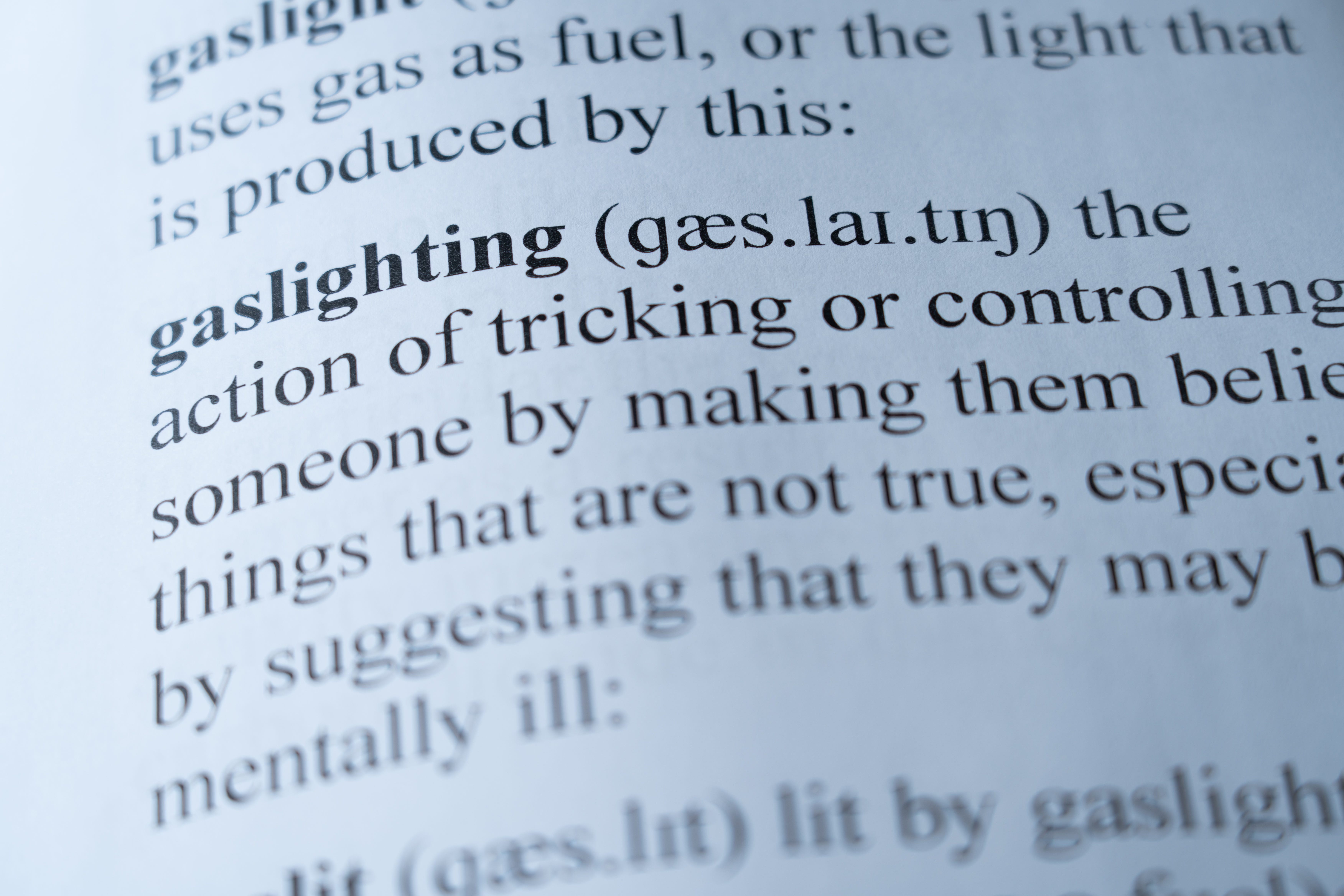
This is gaslighting as budget policy.
The Mathematical Proof of Sabotage
The VA is simultaneously:
1. Eliminating 35,000 healthcare positions
2. Implementing an Oracle EHR requiring 20-60% MORE staff (Congressional testimony)
3. Accelerating Oracle rollout to 13 facilities in 2026, eventually 160+
4. Serving 739,421 newly enrolled PACT Act veterans
5. Operating with a $12 billion budget shortfall
San Diego VA:
Losing 322 positions (including 78 mental health)
Current mental health wait: 60-90 days
Serves 90,000 veterans
Oracle EHR coming (requires 20-60% MORE staff)
When Oracle deploys, San Diego will need to ADD staff to maintain inadequate service levels while simultaneously cutting 322 positions.
Phoenix VA:
Losing 358 positions
Already behind on scheduling
Same Oracle requirements coming
This is mathematically impossible. Unless impossible is the point.
The Oracle EHR: Designed to Fail
The Oracle EHR isn’t just a bad IT project. It’s a $50 billion failure machine being deployed to facilities simultaneously losing staff.
What Oracle requires:
20% average pharmacy staff increase (documented at 4 of 5 sites)
One facility: 15 to 60 pharmacy employees (300% increase)
Lovell deployment: 100 permanent + 100 incoming + 800 temporary staff
Large facilities: projected 60% pharmacy staff increase
What Oracle delivers:
Orders disappearing into “unknown queues”
Medication errors and prescription backlogs
One facility requiring permanent 62% pharmacy staff increase
Patient harm documented by VA OIG
At least one death connected to system failures
They are deploying a system requiring massive staffing increases to facilities losing staff and funding.
Why the Pattern Matters
As I documented in the 30-year timeline, this is the same playbook every time:
1991-1996: The First Setup
Congress passed the Veterans’ Health Care Eligibility Reform Act of 1996—expanding eligibility for hundreds of thousands of veterans, especially for outpatient care. Sounds good, right?
But here’s what they actually did: They expanded who could get care while making funding dependent on “availability of appropriations.” Translation: We’re promising care to more veterans, but only if we feel like funding it.
The law created a priority group enrollment system (Groups 1-8) and built in mechanisms to limit enrollment when “VA resources were insufficient.” By 2003, VA stopped accepting new enrollees in Priority Group 8 entirely—higher-income veterans without service-connected disabilities who’d been promised eligibility seven years earlier.
The predictable result: Wait times exploded. Facilities couldn’t handle the surge. Veterans couldn’t access care. The system looked broken.
The “solution”: Point to the failures as proof VA can’t handle the mission. Begin pushing privatization.
Sound familiar?
1996-2014: Continued underfunding → Phoenix scandal → Choice Act → more privatization
2014-2024: Community Care expansion → VA budget bleed → capacity problems → more privatization
2024-present: PACT Act → kill TEF → eliminate positions → Oracle disaster → [future: more privatization]
Each “crisis” is manufactured through underfunding. Each “solution” is more privatization. Each cycle weakens VA further.
The PACT Act was supposed to break this cycle. The Toxic Exposures Fund was specifically designed to prevent the 1996 pattern—dedicated funding that couldn’t be zeroed out in appropriations, that couldn’t be made “subject to availability.”
That’s why eliminating the TEF matters so much. It removes the protection that was supposed to stop them from running the 1996 playbook again.
Community Care now accounts for 40% of total VA care. Billions flow to private contractors. VA facilities close. Capacity shrinks. The death spiral accelerates.
The Endgame: Make It Fail, Then Privatize
Phase 1: The Collapse (happening now)
Wait times explode. PACT Act claims backlog. Oracle failures compound. Veterans can’t access care. Claims get denied for lack of treatment records. Suicide rates climb.
Phase 2: The Narrative (coming soon)
“Look at these PACT Act costs we can’t afford!”
“Look at these wait times—VA is broken!”
“Look at this Oracle disaster—government can’t do IT!”
“Veterans deserve better than this failing system!”
Phase 2.5: The Psychological Manipulation (the truly diabolical part)
When veterans can’t get mental health care for 90 days, when they can’t get their PACT Act claims processed, when they can’t trust Oracle not to lose their records—they’ll demand Community Care authorization just to survive.They’ll BEG for private care because it’s the only way to get treated.
And then conservatives will point to that desperation and say: “See? Veterans WANT privatization. We’re just giving them what they asked for.”
This is the psychological manipulation that makes the whole strategy work. You don’t have to convince veterans that VA should be privatized. You just make VA so catastrophically dysfunctional that veterans demand alternatives out of sheer desperation—then claim you’re “listening to veterans” when you deliver the privatization you wanted all along.
It’s the same playbook used to privatize public schools: Defund them until they fail, wait for parents to demand charter schools and vouchers out of desperation, then claim “parents want choice” when you created the conditions that forced that choice.
It’s not “veterans want choice.” It’s “veterans want care, and you made VA the only choice that doesn’t work.”
The gaslighting works in both directions:
Direction 1: “These unfilled positions prove they’re not needed”
Direction 2: “Veterans demanding private care proves they don’t want VA”
When the truth is: Veterans are demanding private care because you made VA impossible to access by design.
Phase 3: The “Solution” (the goal all along)
“Reform” means cuts: means testing, stricter eligibility, higher service connection bars. More Community Care expansion. More privatization. More budget hemorrhage. Weaker VA. More profitable contractors.
And now it comes wrapped in veteran testimony: “We asked for this. We demanded choice because VA failed us.”
They never mention who made VA fail.
Phase 4: Repeat
This is design-to-fail as national policy.
Daniel Gade—who testified that VA disability compensation “morally and financially bankrupts” the country—is being positioned to help implement it. Conservative think tanks publish papers about veteran “dependency culture.”
The infrastructure for the attack is in place. The PACT Act funding elimination is the ammunition. The Oracle deployment during staff cuts is the accelerant.
What This Means for PACT Act Veterans
Your rights haven’t changed. The law still says if you served in a qualifying location with a presumptive condition, you have service connection.
But the system’s capacity to deliver is being deliberately destroyed.
What you need to do:
File your PACT Act claim NOW. Your effective date is when VA receives your claim. File before the administrative collapse worsens.
Document everything yourself. Keep your own medical records. Photograph your conditions. Journal your symptoms. Record denied/delayed appointments. They’re going to make you prove everything twice.
Use Community Care strategically. When VA can’t provide timely care, demand Community Care authorization. Get treated somewhere. Create the medical records VA should be creating but can’t. Don’t let their failure create gaps in your evidence.
But understand what you’re doing when you use Community Care: You’re creating the political justification for more privatization. You have no choice—you need care—but know that your desperation will be used as evidence that “veterans want private care.” Document why you had to go outside VA. Make it clear this wasn’t your preference, it was your only option.
Get VSO help. They’re free. They know how to navigate hostile systems. Use them.
But understand: Individual survival tactics aren’t enough to stop the strategy.
The Political Fight
This is a political problem requiring a political solution.
Contact your representatives about:
1. Restoring the Toxic Exposures Fund for FY2026 - This is the protection that was stripped. Without it, PACT Act is vulnerable.
2. Blocking further VA staffing cuts - 35,000 positions gone. Oracle requiring 20-60% increases. The math doesn’t work.
3. Oracle EHR deployment oversight - Deployment during staff cuts is sabotage. Demand Congressional hearings.
4. PACT Act implementation monitoring - How many claims filed? Approved? Denied? Processing times? Make the failure visible.
Support veteran advocacy organizations: VFW, DAV, IAVA, Wounded Warrior Project are fighting this in Congress. They need backing.
Tell your story—but tell it completely: When you wait 90+ days for mental health care, say so. When your PACT Act claim sits for years, say so. When Oracle loses your records, say so. But also say WHY you had to use Community Care. Make it clear you didn’t choose it because you prefer private care—you were forced into it by deliberate VA failures.
Vote accordingly: The people who zeroed out the TEF have names. H.R. 1968 passed the House 217-213 on March 11, 2025—every Republican voted yes, every Democrat voted no. It was introduced by Rep. Tom Cole (R-OK), backed by House Veterans Affairs Committee Chairman Mike Bost (R-IL), championed by Speaker Mike Johnson (R-LA), and endorsed by President Trump. The Senate passed it 54-46 on March 14.
When Rep. Jerry Nadler (D-NY) offered an amendment in the House Rules Committee to restore the TEF funding, Republicans defeated it 9-3. Every Democrat voted to restore it. Every Republican voted to eliminate it.
They’re on record. Remember who designed this failure.
The Bottom Line
They promised care for toxic exposures after decades of denial.
They created dedicated funding to protect the promise.
Then they zeroed out the funding, eliminated 35,000 positions, deployed a failing EHR requiring massive staff increases, and created mathematically impossible conditions.
This isn’t the first time. They’ve been running this playbook for 30 years.
It’s not incompetence. It’s strategy.
The PACT Act was supposed to be different. The apology for burn pits. The recognition too long delayed. The promise finally kept.
Instead, it’s becoming the latest exhibit in the design-to-fail pattern.
They’re not trying to make the math work. They’re making sure it doesn’t.
When “mathematically impossible” is the point, you’re not witnessing failure—you’re witnessing sabotage.
And when veterans beg for alternatives out of desperation, you’re witnessing the endgame: making you demand the very thing they wanted to impose all along.
The question is: What are we going to do about it?
Read the full investigative reporting with complete sourcing:
Understand the 30-year pattern:
VA Design to Fail: Timeline 1991-2025 - HadIt.com
Share your story: Are you experiencing PACT Act claim delays? VA healthcare access problems? Oracle EHR failures? Tell us in the comments. When you share your Community Care experience, explain WHY you were forced to use it. Make the sabotage visible.


